Beaches in Nice: Your Guide to the Best Stretches of Coast
The beaches in Nice run for almost seven kilometres along the French Riviera, from Vieux Nice to the west of the city, following the promenade des Anglais and the Baie des Anges. Public beach or private beach club, smooth pebbles, hidden coves below the rocks of Mont Boron, turquoise water and Mediterranean sunshine: every spot has its own atmosphere. The city of Nice counts twenty-three public beaches and sixteen private concessions, plus two water sports bases and two accessible beaches with the Handiplage label. This guide covers the most beautiful beaches in Nice, the sandy stretches nearby, water sports and rentals, bars and beach restaurants, and how to reach each beach on foot, by bus or by train.
Public beaches in Nice, from Vieux Nice to the west of the city
Along the quai des Etats Unis and then the promenade des Anglais, the public beaches of Nice follow one another with free access, showers, lifeguard posts and bathing zones supervised in season. Your choice usually comes down to three things: the distance from the city centre, how crowded the sand and gravel get, and how much sun each spot holds late in the afternoon. These are the ones worth knowing.
- Plage du Centenaire, beside the Jardin Albert 1er: the quickest to reach from the Avenue Jean Médecin, with a supervised swimming area in summer
- Plage des Ponchettes and Opéra Plage, at the edge of Vieux Nice: lively, with cafés and restaurants a minute away from the flower market
- Plage de Magnan and Plage du Voilier: local favourites, far quieter on weekdays than at the weekend
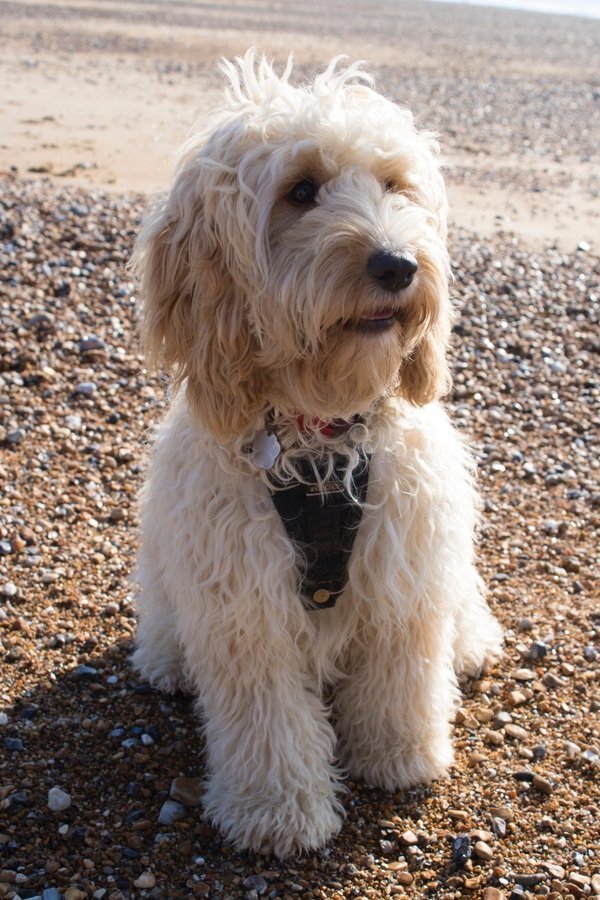
- Plage de Lenval: the dog friendly address on this coast, much like our own house, where pets are welcome
- Plage de Carras: wide, well equipped, located in the Fabron district with a water sports base next door
- Plage de la Lanterne: the last beach before the airport, perfect for an evening swim facing the blue of the Mediterranean sea
Prices are simple here: free beaches, no booking, no lounger to hire. Bring a towel, a bottle of water and a bit of patience in July and August, when the best spots go early. Arrive before 10 am in high season and you will still find room to spread out.
Hidden beaches and secret coves on the Cap de Nice
Looking for something quieter? Head east, past the port, towards Mont Boron. Plage de la Réserve, the Bains Militaires and Coco Beach are reached by steep steps or by the coastal path, with rocks at either end and remarkably clear sea. Coco Beach, a beach located below the Mont Boron road, is the one photographers come back for. None of them is supervised and the seabed drops away fast, so these hidden gems suit confident swimmers rather than small children. Come early to discover them at their best: at first light the surface is glass flat, the first boats leave the bay, and the photo takes itself. Locals will tell you these secret beaches are the ones they keep for themselves, and they are not wrong.
Private beaches in Nice: sun loungers, bars and beachfront dining
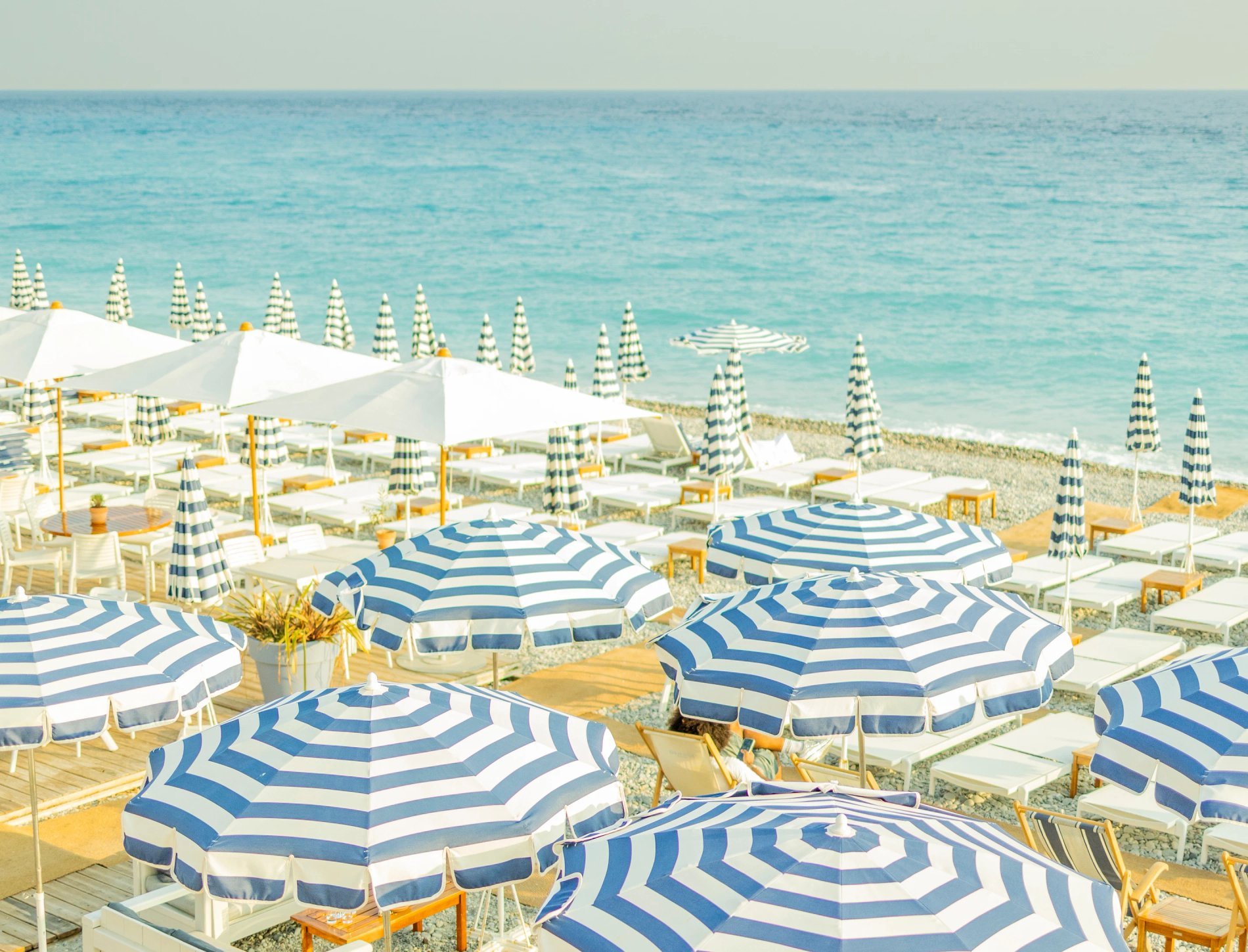
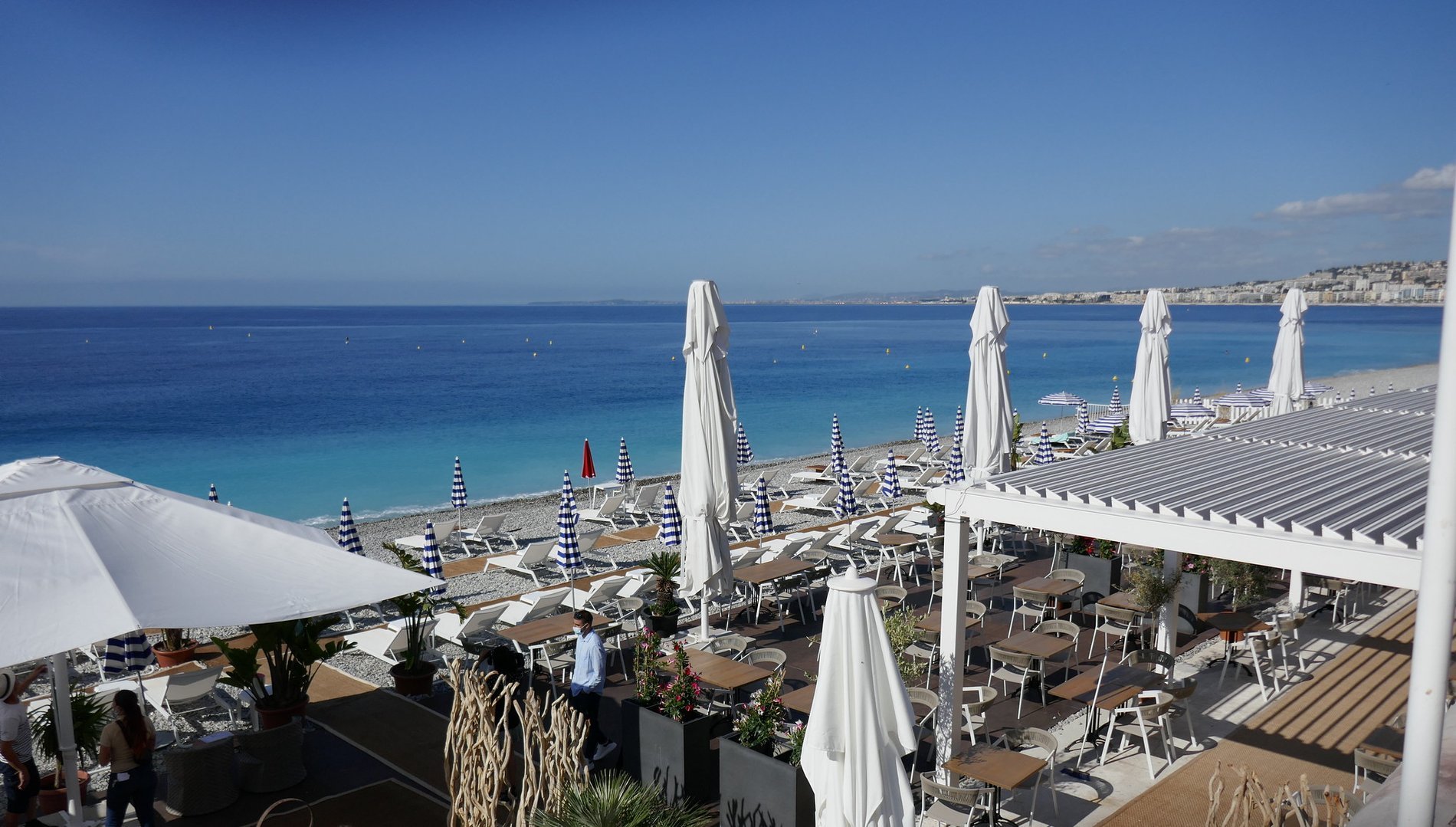
Private beach clubs are the other half of the story. The principle never varies: you hire a lounger by the day or the half day, and the club offers an organised space with a welcome desk, changing rooms, showers, a bar and a beach restaurant serving Niçoise dishes and fresh fish a few metres from the sea. If you are looking for the best beach bars in Nice, this is where they are: most clubs offer a bar at the back of the deck, and the bar usually opens at midday.
- Ruhl Plage and Blue Beach: two reliable classics of the beachfront, in high demand at weekends
- Plage Beau Rivage: a wide teak deck opening onto the Baie des Anges
- Castel Plage, below the Château hill: sheltered sea and a relaxed atmosphere
- Neptune, Florida Beach, Miami Plage and Cocoon Beach: club style, live music and evening events facing the sunset
- Opéra Plage: one of the oldest beach concessions in France, in business since the end of the nineteenth century
Our recommendation: book the day before in July and August, especially for dinner at sunset. From a long lunch to a full afternoon of comfort, from the first coffee to late idleness, these clubs deliver the kind of luxury our guests mention when they review their stay. Food and drink are served until late in the evening, and the restaurant terraces are among the most beautiful spots on the whole seafront. Lounger, parasol and food prices vary from one club to another and change every season, so check directly before you go.
Pebbles, not sand: what a beach day in Nice really looks like
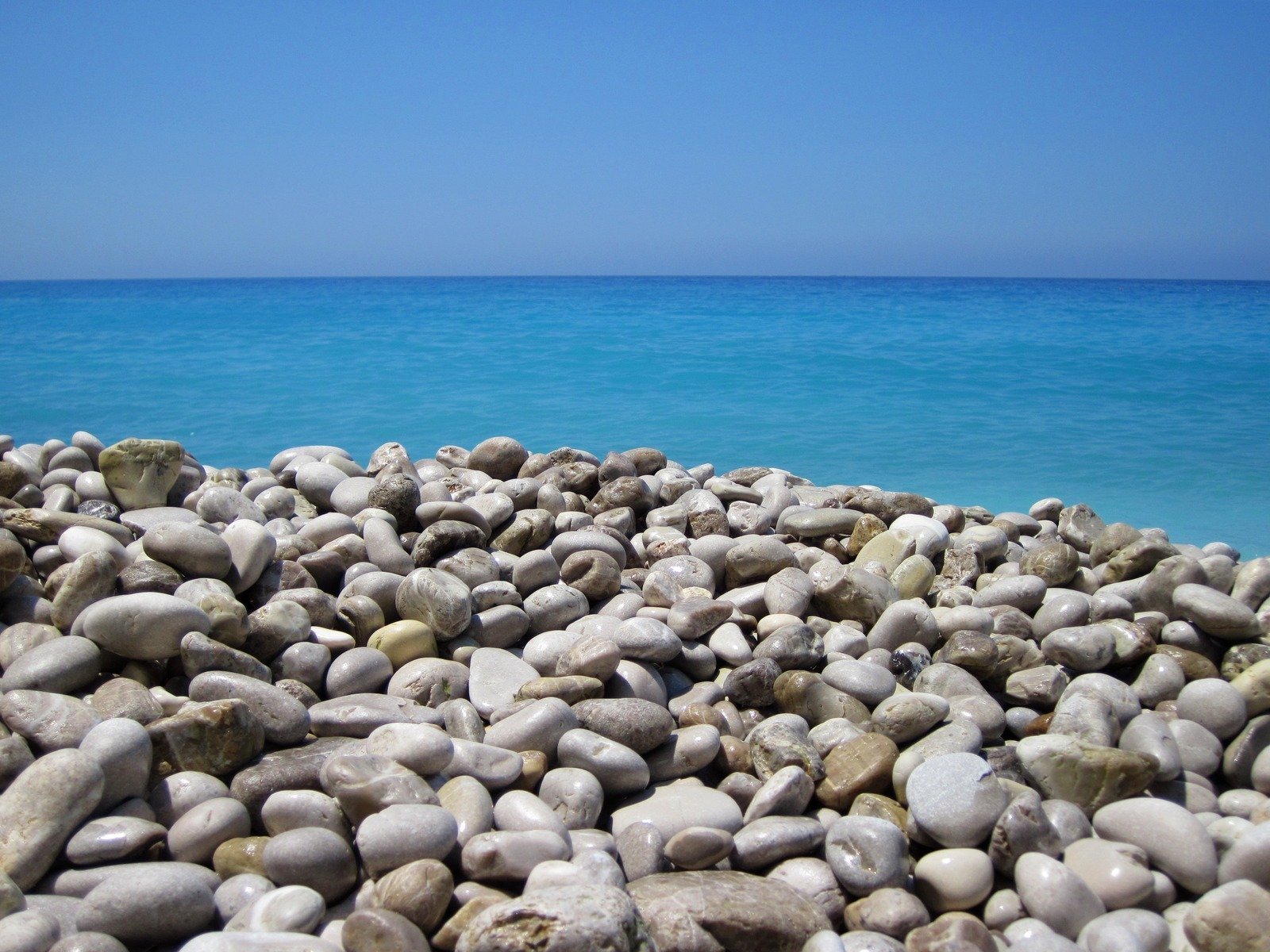
There is one thing every travel guide should say clearly. Nice has no sand. The main shoreline is made of smooth grey pebbles, rolled here over centuries by the Var and the Paillon rivers, and the sound of that gravel sliding back after each wave is part of the city's soundtrack. Bring beach shoes and a foam mat, and your back will thank you. In exchange, the sea stays exceptionally clear, which is why snorkeling and diving are so popular here compared with the sandy beaches further west.
Sandy beaches around Nice: Villefranche, Cap Ferrat and beyond
If fine sand matters to you, the answer is fifteen to thirty minutes away by train or bus. These beaches around Nice make easy day trips, and most of them are located a short walk from a station or a bus stop.
- Plage des Marinières, Villefranche sur Mer: entirely covered with fine sand, with the railway station perched just above the beach
- Plage de Passable, Saint Jean Cap Ferrat: a beautiful view across the bay, one public section and one private beach club, bus 15 from the centre
- Plage Paloma and the Anse de la Scaletta, Saint Jean Cap Ferrat: at the end of the peninsula path, sheltered sea, white yachts and Monaco on the horizon, spectacular in Grand Prix week
- Plage de la Petite Afrique and Plage des Fourmis, Beaulieu sur Mer: palm trees, a children's playground and beach volleyball, two of the most family friendly options on the coast
- Plage de la Mala, Cap d'Ail: one hundred and fifty steps down, a sea cave and turquoise shallows that snorkeling fans love
- Plage de la Garoupe, Antibes: white sand, clear shallows and, in spring, a view of the snow capped Alps
- Cagnes sur Mer and Saint Laurent du Var: long open beaches you can reach by the seafront cycle path
Getting around: train, bus and day trips
Public transport does the work here, and it is one of the pleasures of a stay in Nice. From Hotel Aria, Nice-Ville station is a five minute walk, coastal trains run every half hour, and the line follows the sea almost the whole way. On the Côte d'Azur line, count around thirty minutes to Antibes, a little more for Cannes and its film festival, fifteen for Villefranche sur Mer, and a short bus ride up to the village of Eze if you want the view rather than the swim. Boat tours in Nice leave from the port if you would rather see the coast from the sea. No car, no parking, no stress.
Water sports, family beaches and access for all
Water sports: paddle, kayak, jet ski and diving
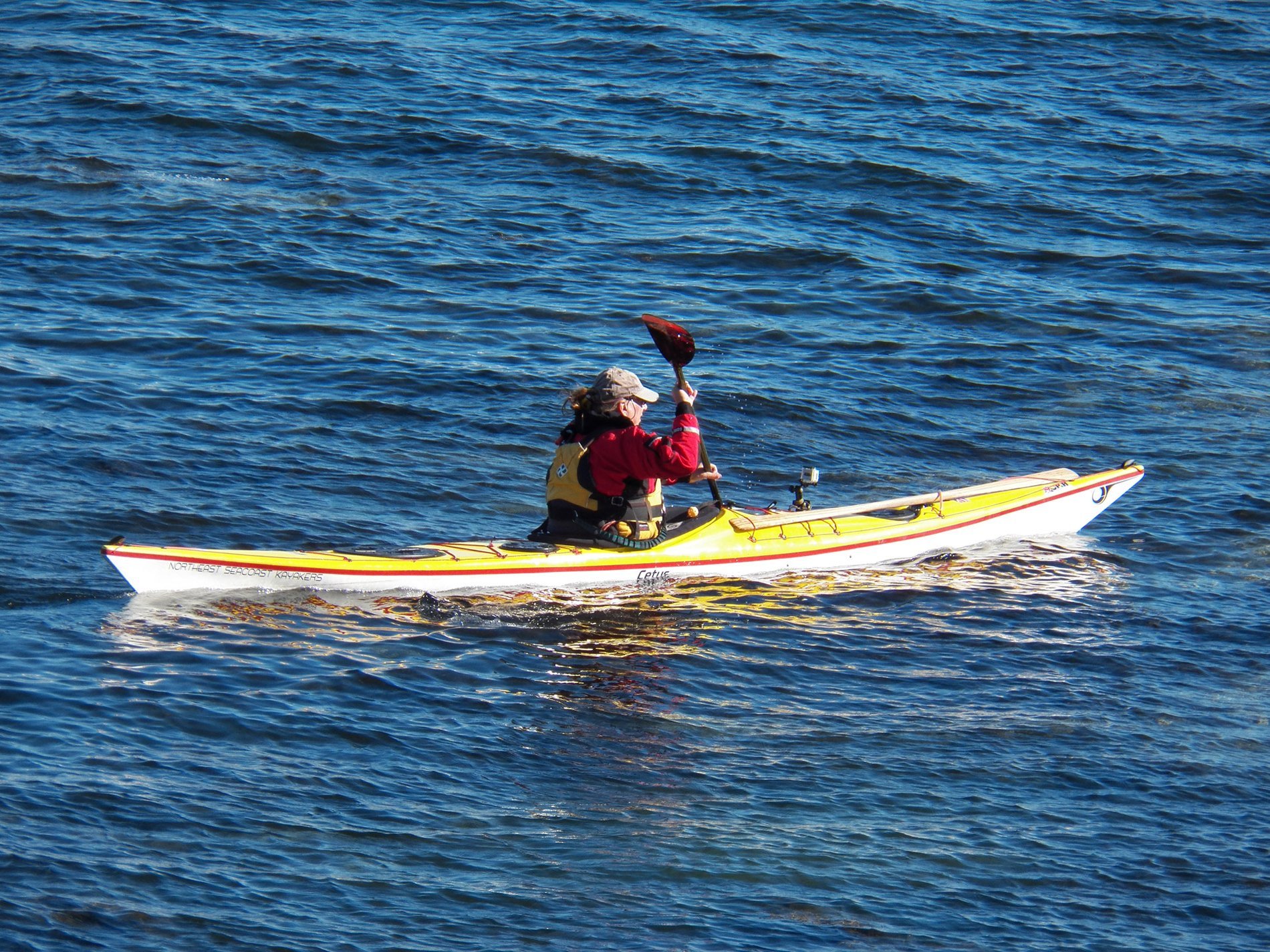
Two municipal water sports bases set the tone: paddle, kayak, windsurfing, jet ski and boat trips for anyone chasing a bit of adrenaline, with instructors and equipment on site. Mornings bring the best conditions, when the sea is flattest and rental prices are often gentler. Divers and snorkelers head instead for the rocks east of the port, where visibility is at its best in June and September.
Family beaches and activities for children
Families tend to gather on the supervised central beaches, where the slope is gentle and beach clubs run activities for children through July and August. A morning in the sea together, an afternoon of reading in the shade for the parents: the balance is easy to find here, and the pebbles turn out to be more fun than expected once the children start building towers with them. For sand under small feet, Beaulieu sur Mer and Villefranche sur Mer remain the safest bets.
Adapted beaches and dog friendly spots
Two adapted beaches, at Carras and at the Centenaire, hold the Handiplage 3 buoy label. Amphibious beach wheelchairs, guided walkways, adapted toilets, shaded shelters, reserved parking and trained staff are all available free of charge, without booking, throughout the summer season. Each site has its own dedicated first aid post. The same logic applies at Hotel Aria, which offers rooms adapted for guests with reduced mobility, including a ground floor double with no step to climb. Travelling with a dog? Plage de Lenval is the address most often recommended, and our hotel also welcomes pets for 12 € per day. Local rules are set by municipal order each year, so a quick call to the city or to the Nice Côte d'Azur tourist office will save you a wasted trip.
When to go: weather, sunshine and the quiet hours
Nice enjoys one of the mildest climates in France, and the season for a swim usually stretches from late May to early October. June is the sweet spot: the sea has warmed up, the light is long, and the coast is far less crowded than in August. September is the connoisseur's month, with warm shallows and a city that breathes again. Out of season, the seafront belongs to walkers, and the city fills up for the Nice Carnival in February. On any sunny morning, the hour after sunrise and the hour before sunset are when the beaches in Nice look their best.
Tips for visiting the beaches in Nice
A few practical habits make the difference between a good afternoon and a perfect one. The coast offers something different from one hour to the next, so enjoy your time by the sea and let the rest follow.
- Go early or late: the main city beaches fill up between 11 am and 4 pm, while nine in the morning and six in the evening are far more relaxing
- Wear beach shoes: the pebbles are hot at midday, and a foam mat turns a decent spot into our favorite kind of afternoon
- Reserve a lounger the evening before in high season if you want a bar, a parasol and table service at your feet
- Mix free beaches and clubs: a quiet morning on a public stretch, then a long lunch at a beach restaurant
- Explore beyond the promenade: the coves of the Cap de Nice are ten minutes from the centre by bus
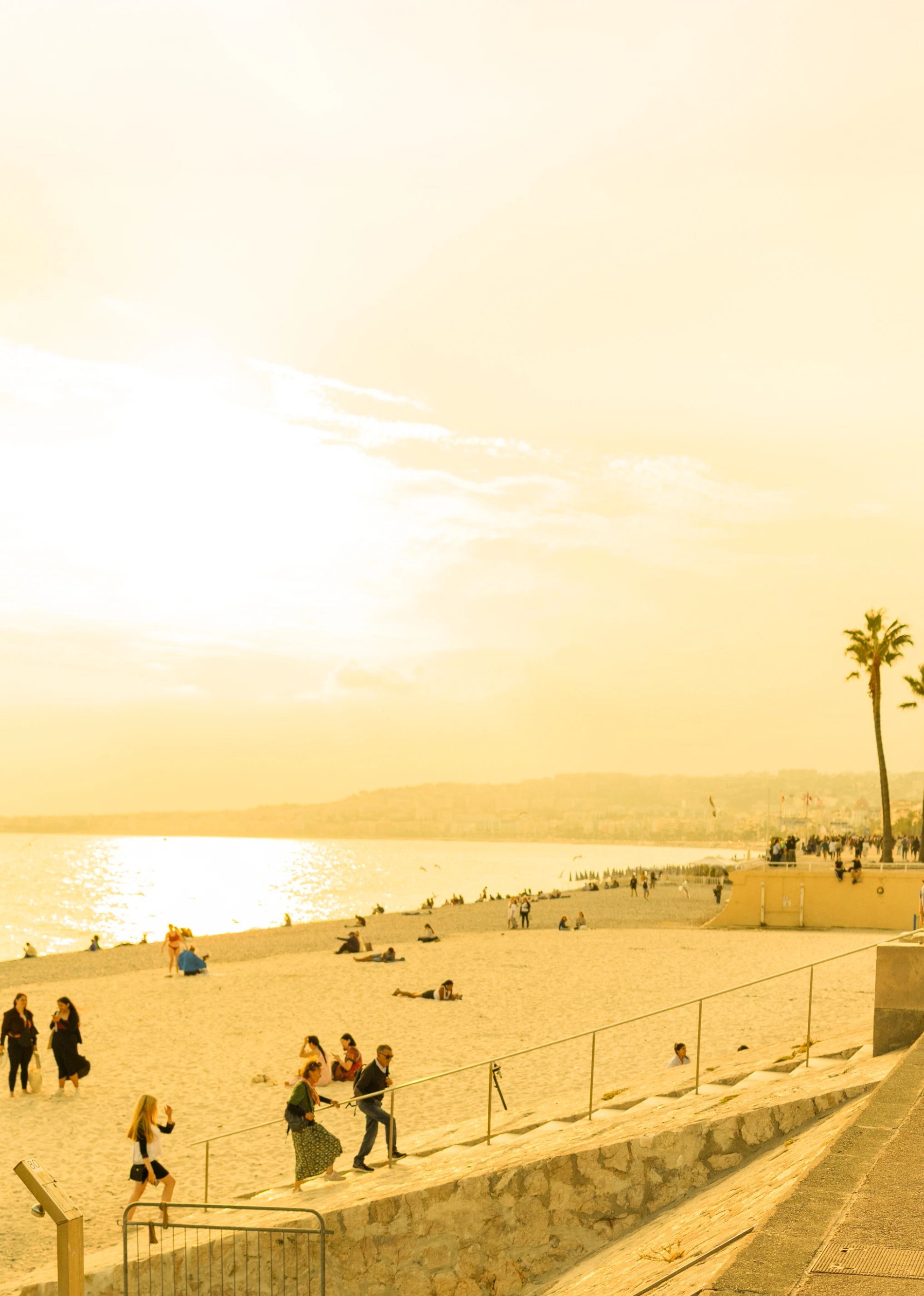
- Save the photo for sunset: the white facades of the seafront turn gold, and the Baie des Anges is at its most beautiful
Hotel Aria: a five minute walk from the beach
Location: sea, station and old town on foot
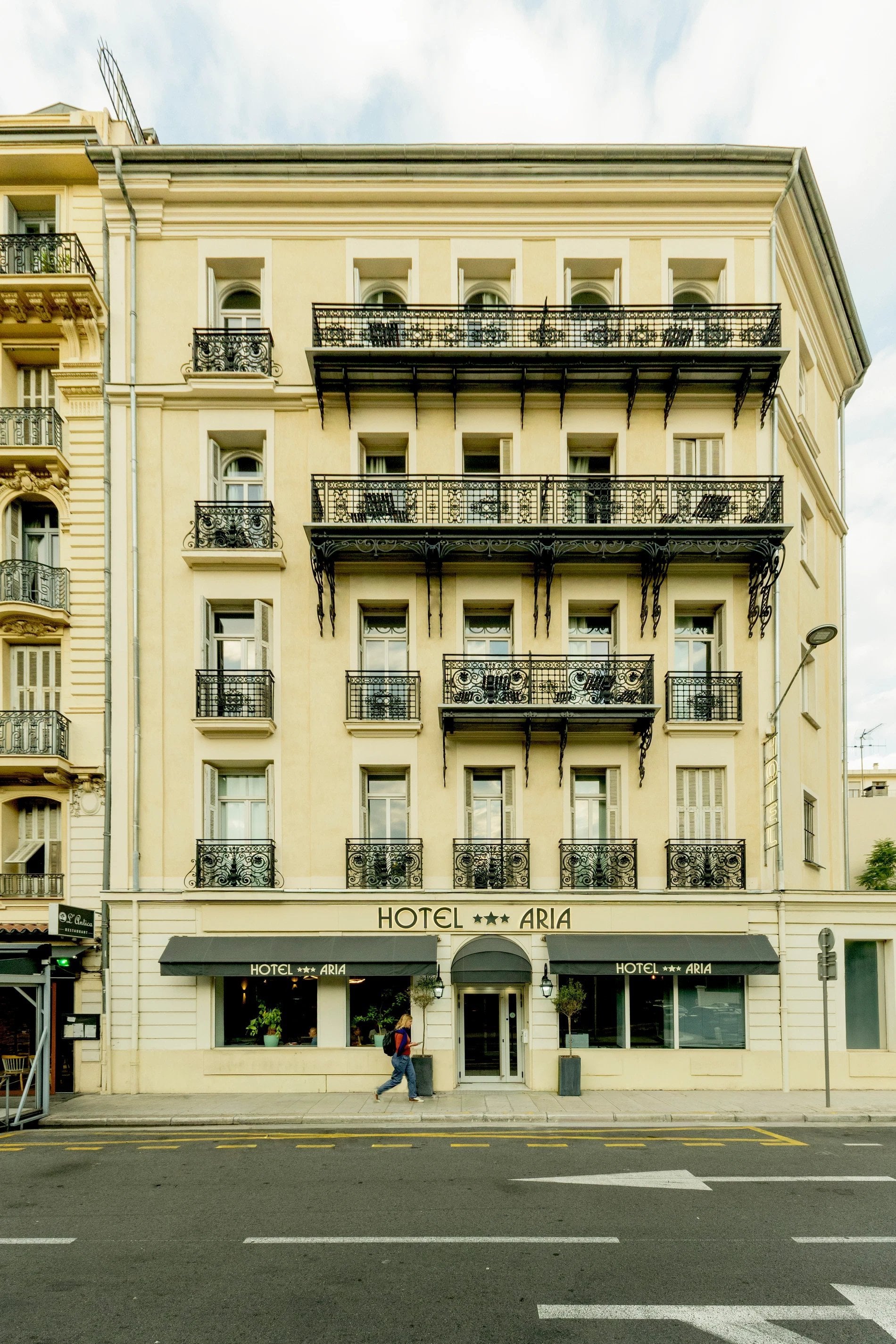
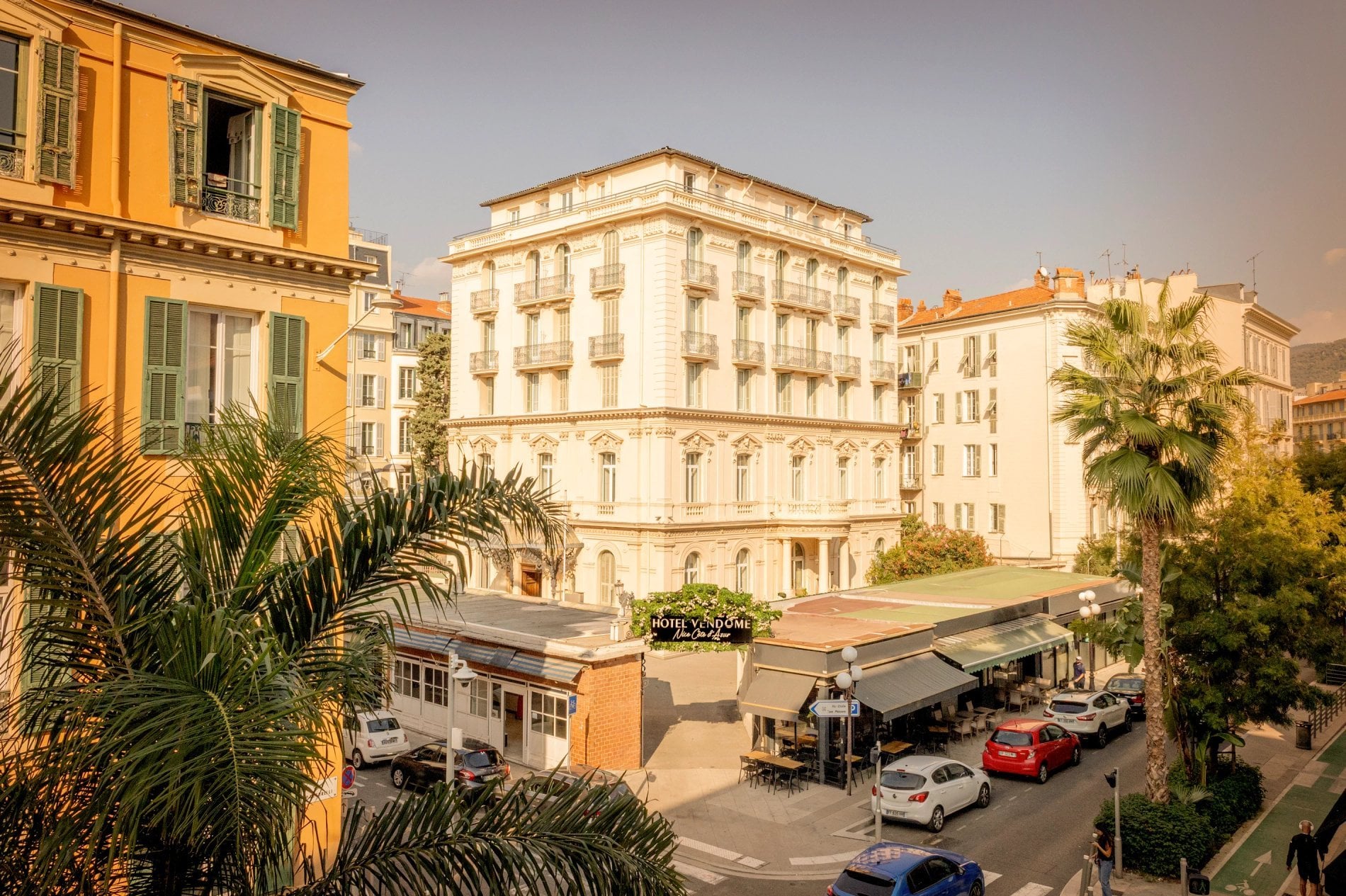
Reaching the sea on foot, with no car and no parking to find, is exactly what the location of Hotel Aria allows. The hotel is located on the French Riviera at 15 avenue Auber, right in the centre of Nice, between Nice-Ville station and the seafront: five minutes to glimpse the Baie des Anges, five minutes to the station and its trains towards Villefranche sur Mer, Beaulieu sur Mer or Antibes, a tram line close by for the airport. Avenue Jean Médecin, Vieux Nice and Place Masséna all sit within the same short walk. Still deciding where to stay in Nice?
Rooms: from comfort double to family room
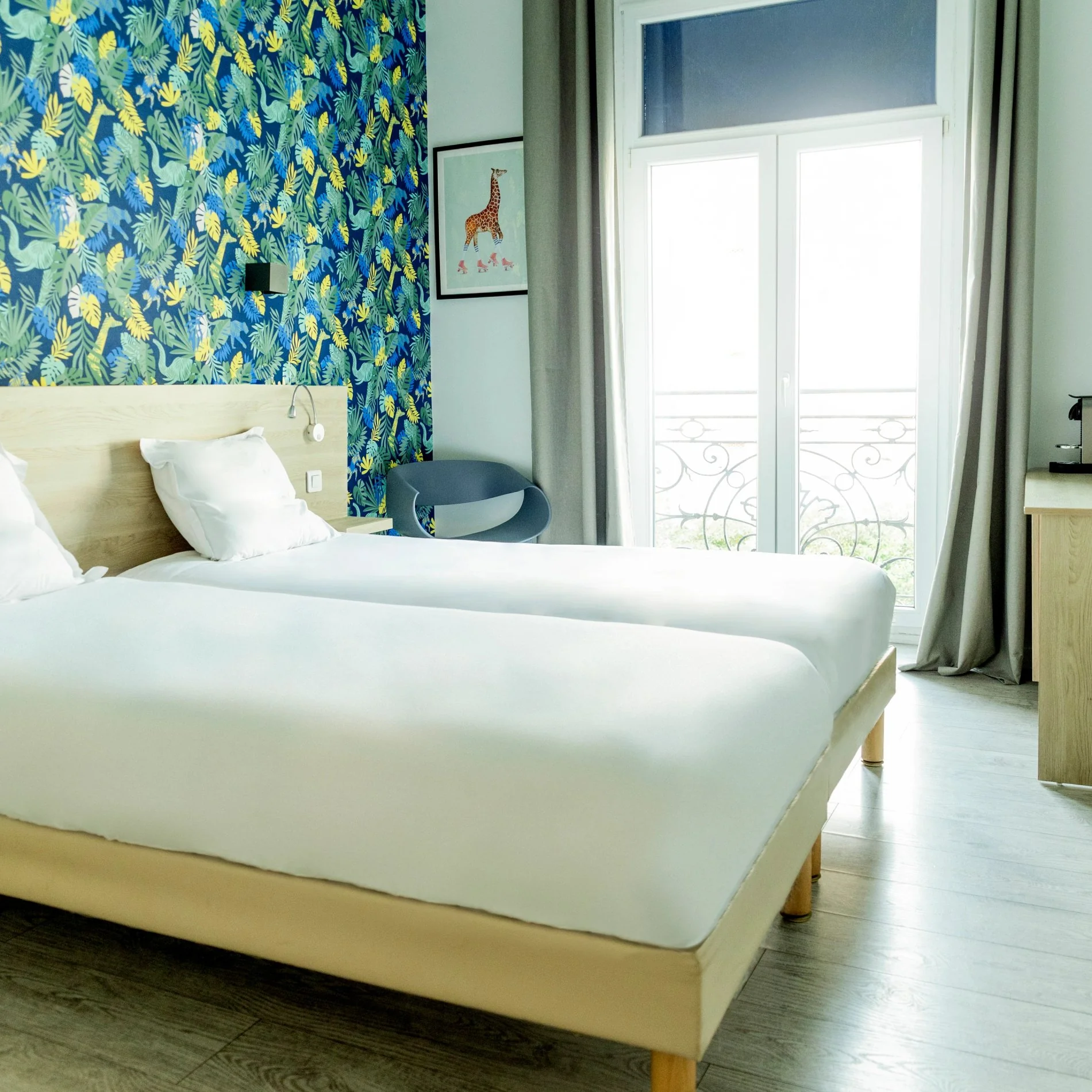
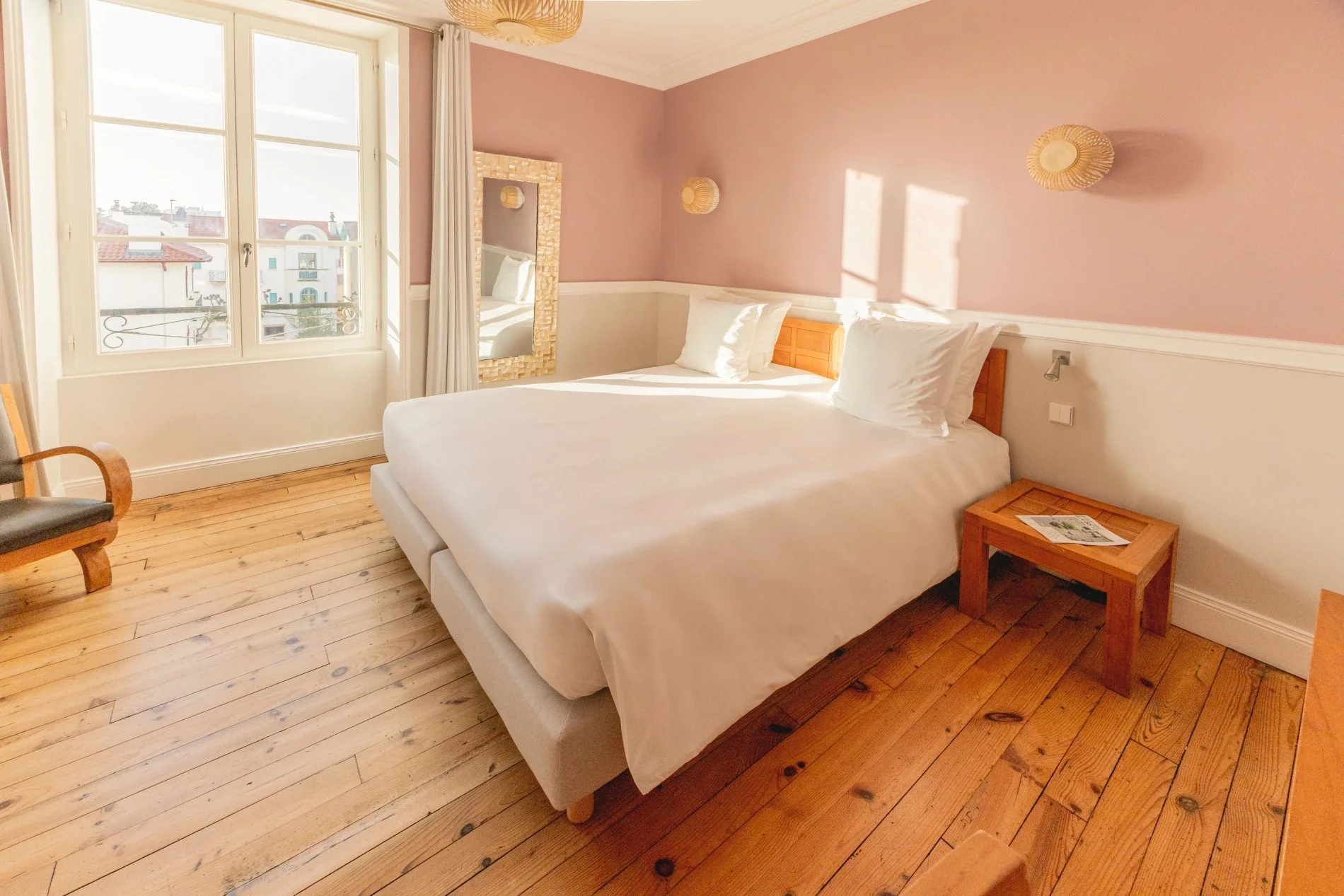
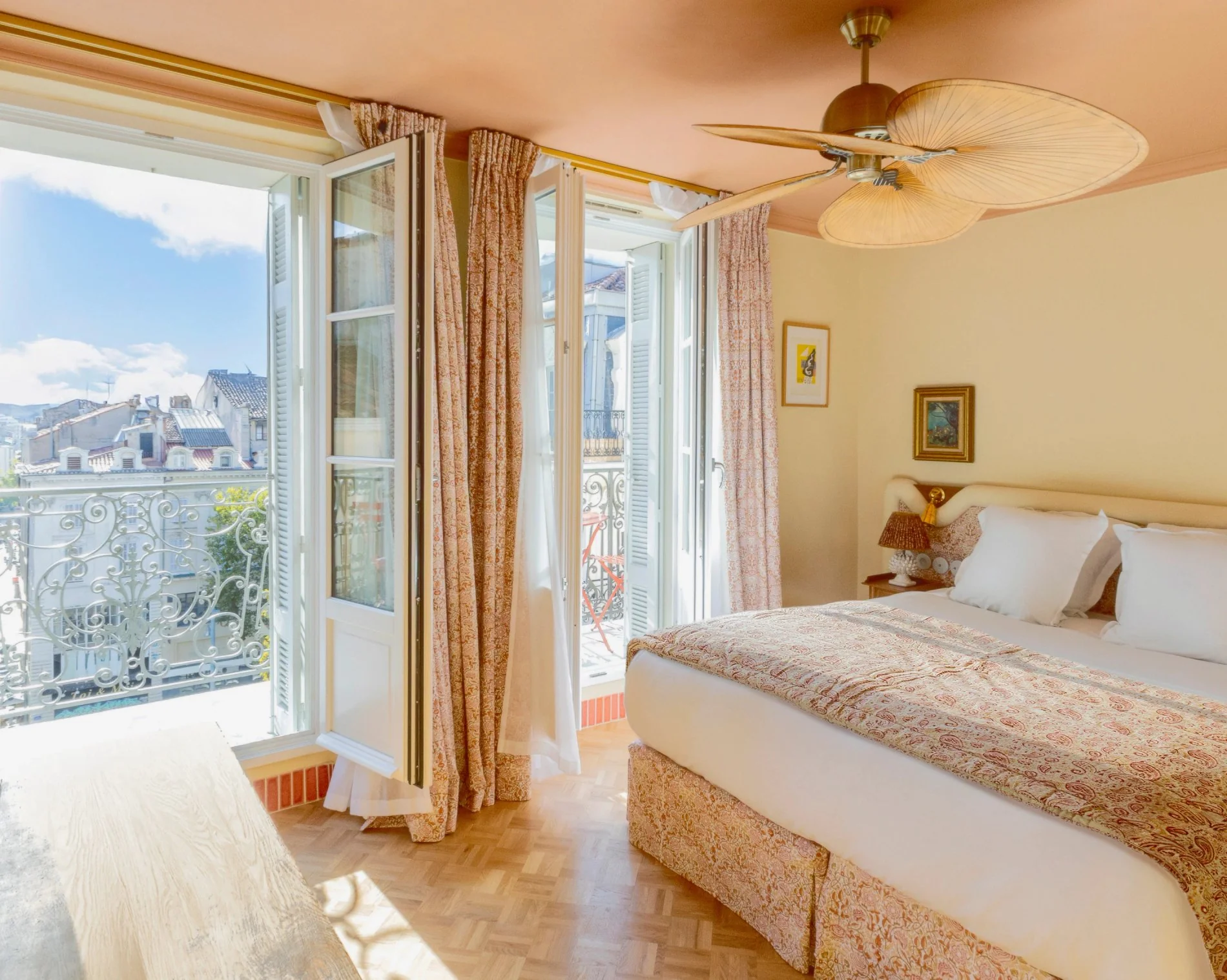
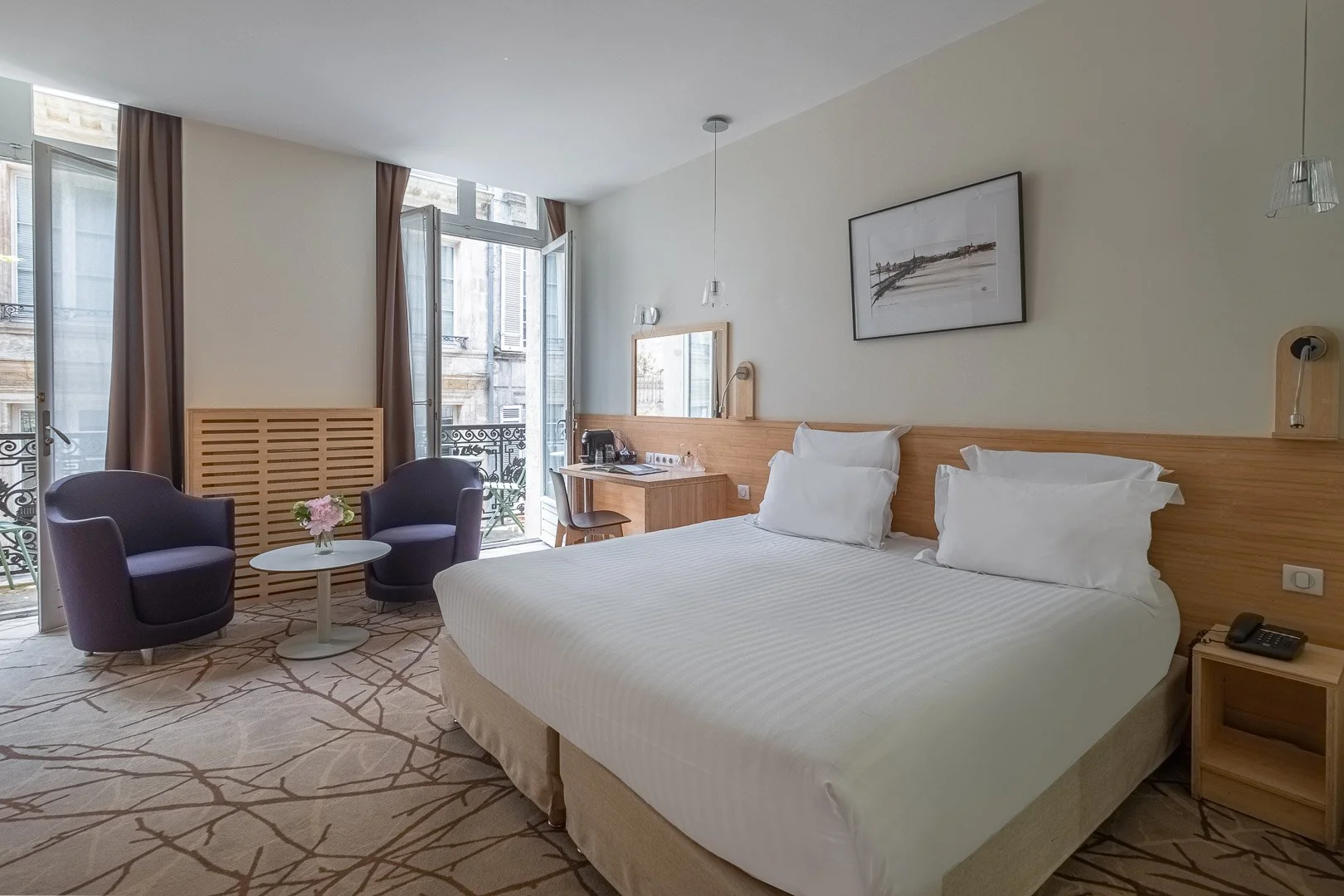
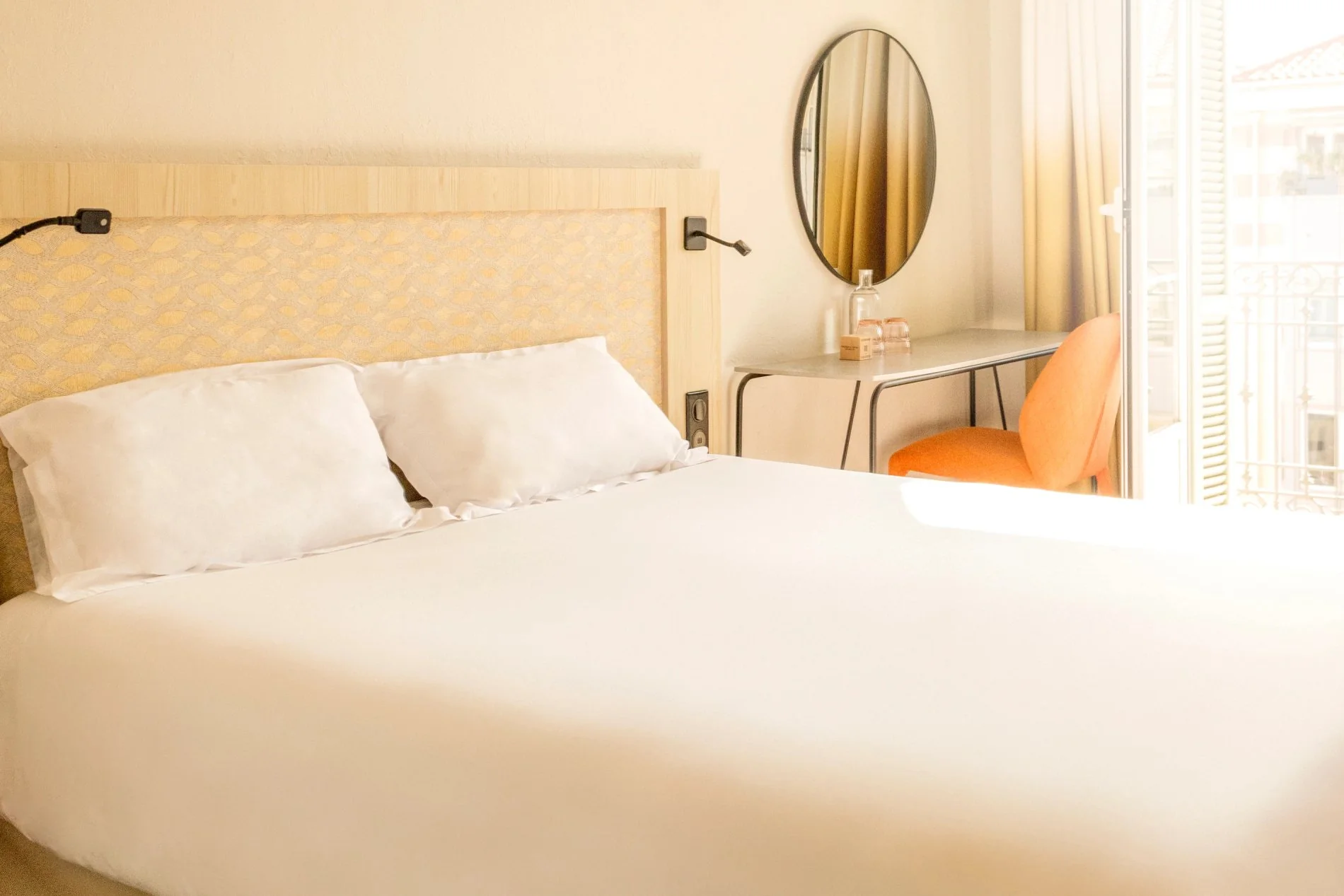
Our thirty soundproofed, air conditioned rooms protect your sleep and your privacy, with a flat screen television, free wifi, a Nespresso machine and a bottle of water refreshed every morning. The modern bathroom brings together a walk in shower, a hairdryer and carefully chosen products.
- Comfort double or twin: the most requested format for two
- Superior room, or with a balcony: a few extra square metres and a slice of Niçois sky
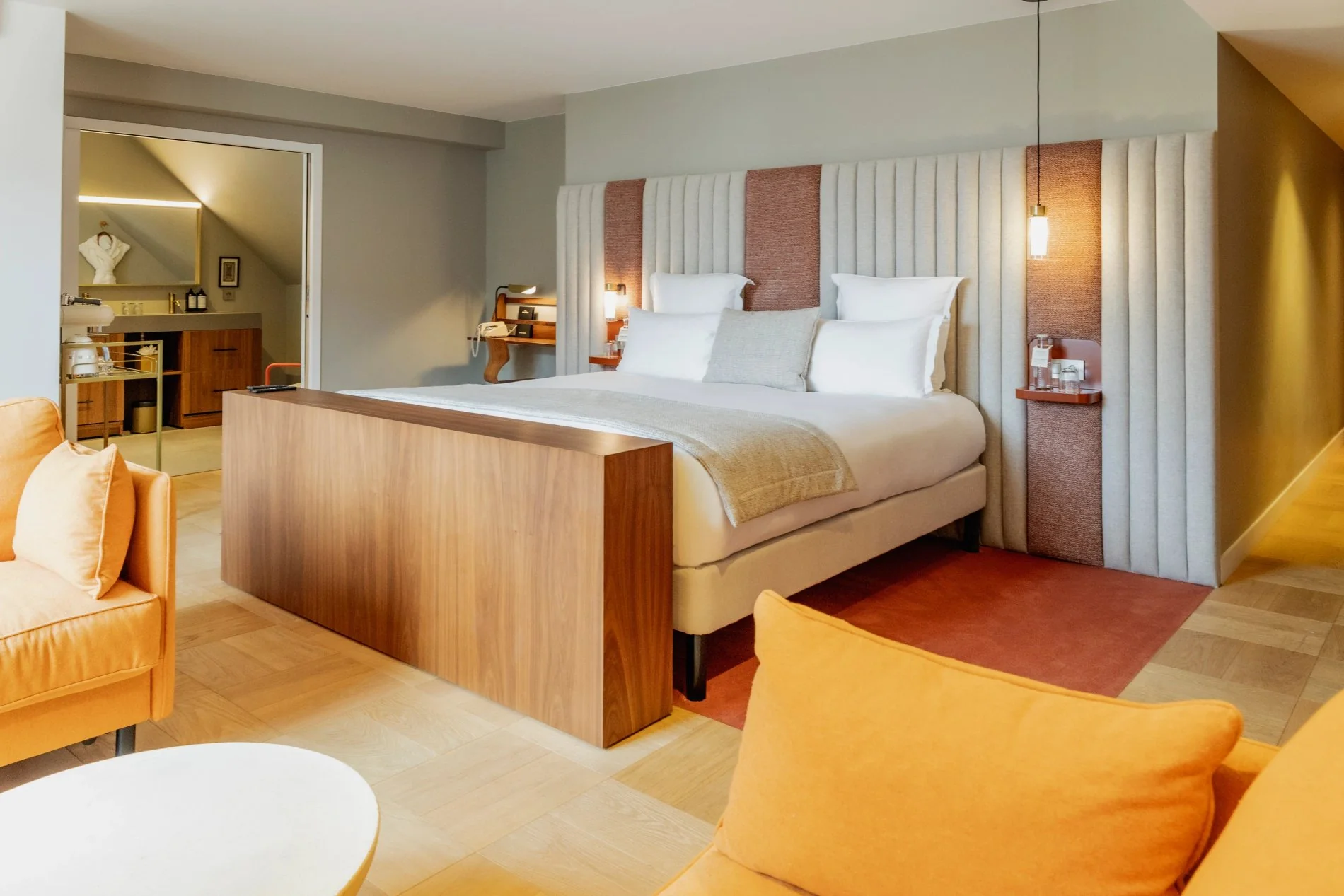
- Deluxe room: for space and quiet
- Family room: designed for travelling with children, with a high chair, a bottle warmer and a free cot subject to availability
- Double room on the ground floor: no stairs at all, welcome after an afternoon by the sea
Services and facilities at Hotel Aria
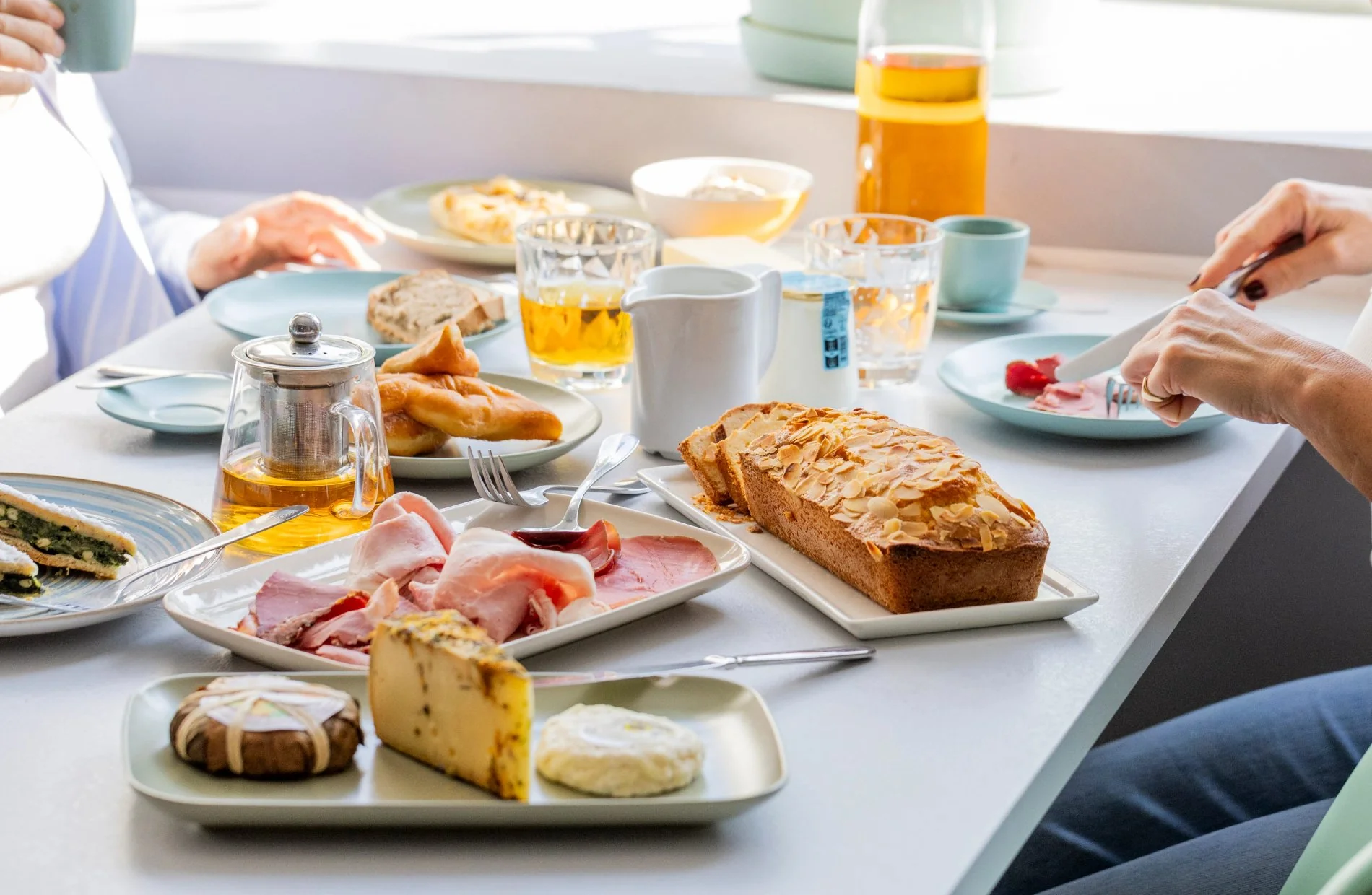
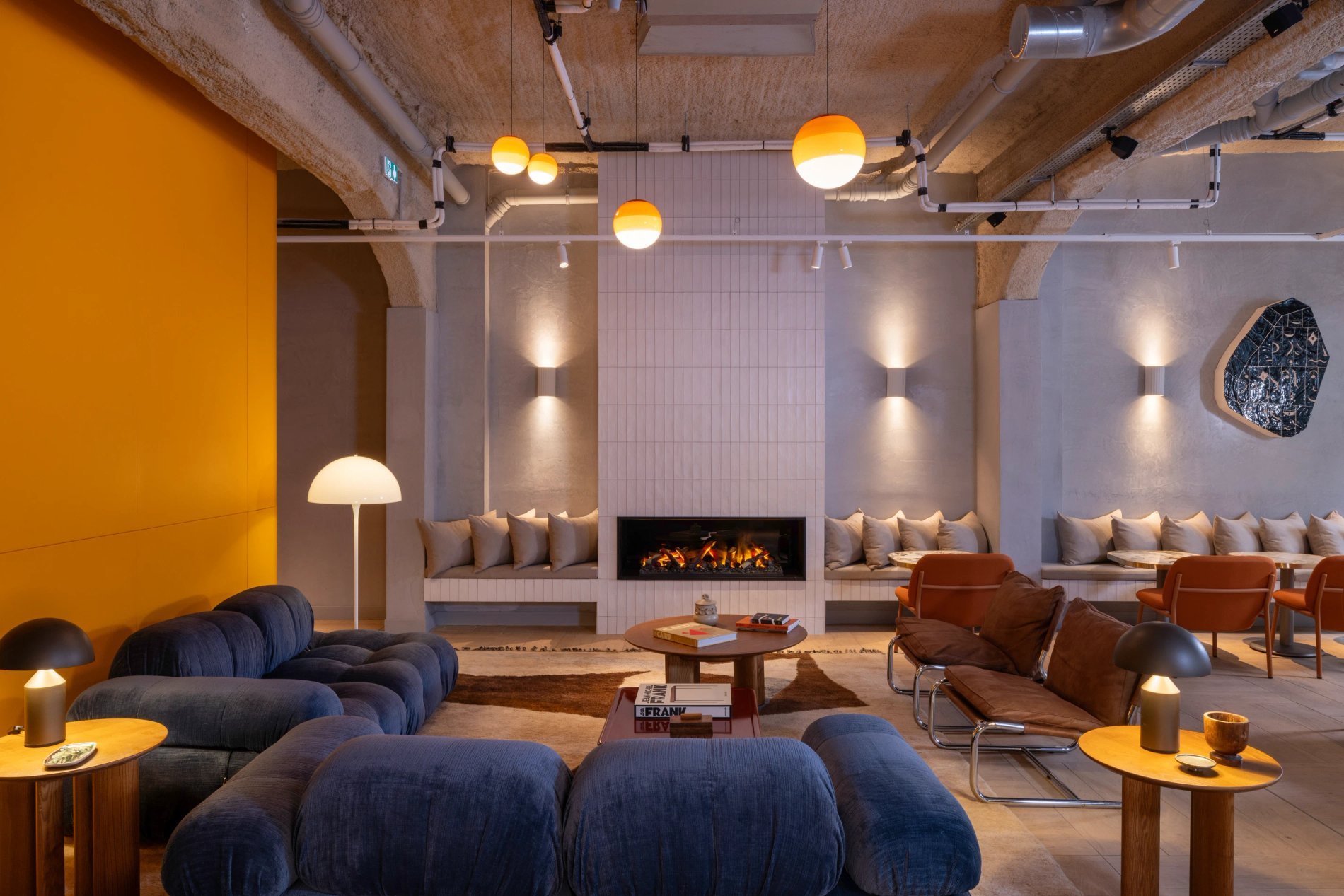
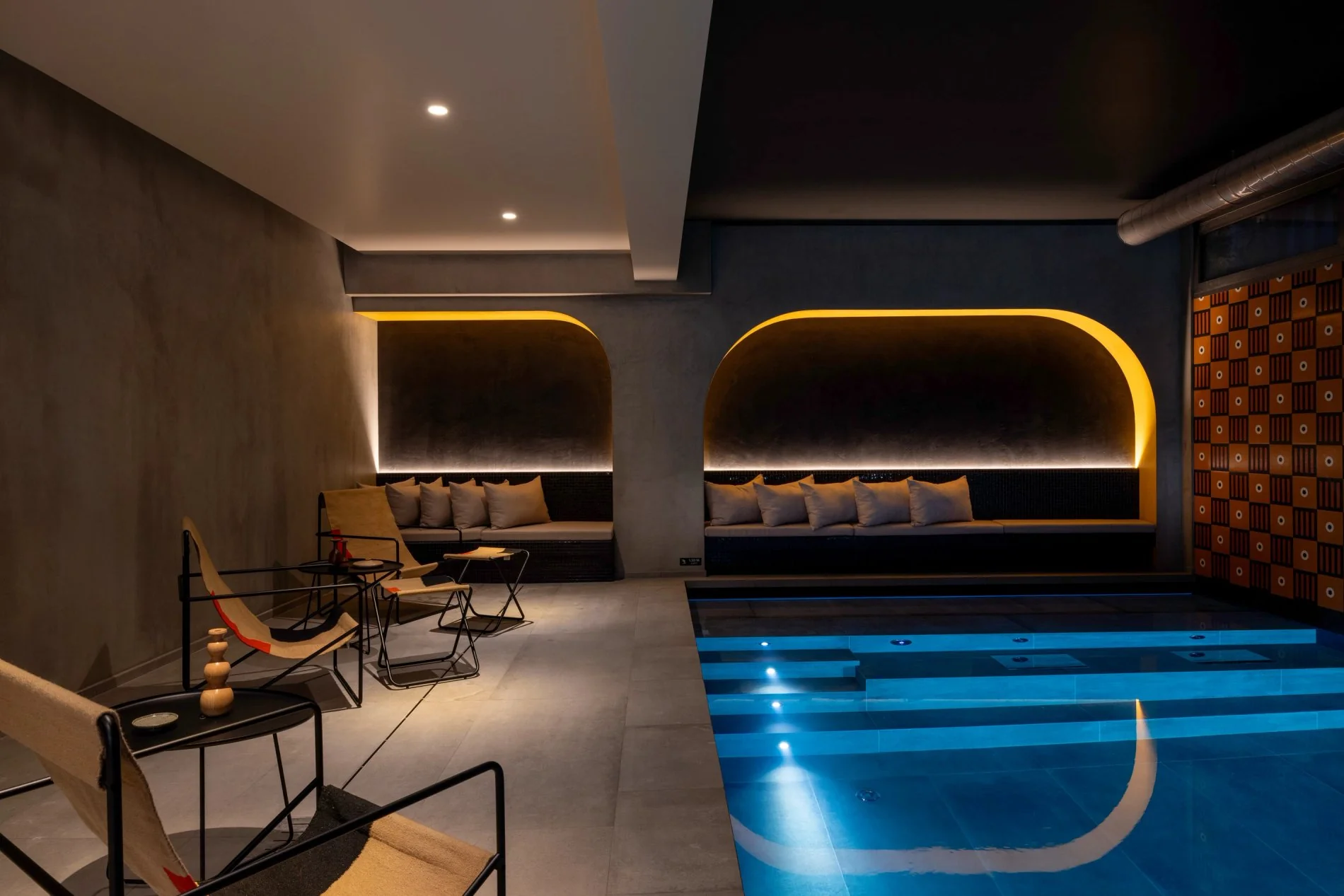
Breakfast is a full buffet served in a room flooded with morning light, built around seasonal produce and local food from our partner producers, so you can be on the seafront early. Reception is open around the clock to book your dinner table, arrange an airport transfer or tell you where to hire a paddle board. Children welcome, pets welcome, Belle Epoque style and a Green Key commitment: book on our official website and you get the best guaranteed rate along with our current offers. Share your email address with us and we will send you the next ones first. A congress at the Acropolis, the International Fair, shopping on the Rue de France or a city break in a 3 star hotel in the centre: the house works just as well outside beach season, at a rate that competes with any cheap hotel in Nice. One question before you travel? A quick contact with reception is all it takes.
Your beaches in Nice start at Hotel Aria
Few cities offer this kind of pleasure: leaving a terrace in the old town, crossing one street and finding yourself facing the Mediterranean with a towel under your arm. Between the busy city shoreline and the quiet coves of the Cap de Nice, the beaches in Nice sum up everything the French Riviera does best, from sunrise to a last dinner by the sea.
FAQ - Frequently asked questions about the beaches in Nice
What are the most beautiful beaches in Nice?
Ponchettes and Opéra Plage for the old town atmosphere, Beau Rivage and Castel Plage for comfort and table service, Plage de la Réserve and Coco Beach for the rocks and clear shallows of Mont Boron. Each section of the coast attracts a different crowd, so it is worth trying two or three.
Are the beaches in Nice, France sand or pebbles?
They are pebble beaches, shaped by the gravel carried down by the Var and the Paillon. Beach shoes make a real difference. For a sandy beach, take the train to Villefranche sur Mer, Saint Jean Cap Ferrat, Beaulieu sur Mer or Antibes, all fifteen to thirty minutes away.
Are there free public beaches in Nice?
Yes. The city has twenty-three free beaches, from Vieux Nice to the Plage de la Lanterne. The most central ones are supervised in season and equipped with showers and first aid posts. The small hidden coves on the Cap de Nice have no lifeguards at all, so swim with care.
Which beaches in Nice allow dogs?
Plage de Lenval is the beach most often recommended for visitors with a dog, and Hotel Aria welcomes pets too, for 12 € per day. Because local rules are reviewed by municipal order every year, it is worth checking with the city or the tourist office before your visit.
Are the beaches in Nice wheelchair accessible?
Yes. Two adapted beaches, at Carras and beside the Jardin Albert 1er, hold the Handiplage 3 buoy label, with amphibious wheelchairs, adapted toilets, shaded areas, reserved parking and trained staff. The service is free, no booking is required, and it runs throughout the summer opening period.
Where to stay in Nice in summer to be well located?
To enjoy Nice in summer, choose accommodation in the center, close to the sea and transport. Hotel Aria, at 15 Avenue Auber, places guests minutes from the Promenade des Anglais, Place Masséna and Avenue Jean Médecin. Among the hotels in Nice, this address offers an ideal base and one of the best value options, with easy access to the whole Riviera.
Which beach is closest to Hotel Aria?
The nearest beach is located a five minute walk away, beside the Jardin Albert 1er, with a supervised swim zone in season. A few minutes further and you reach the private beaches of the seafront, their loungers and their view over the Baie des Anges. Reception is your best contact for planning the afternoon.